
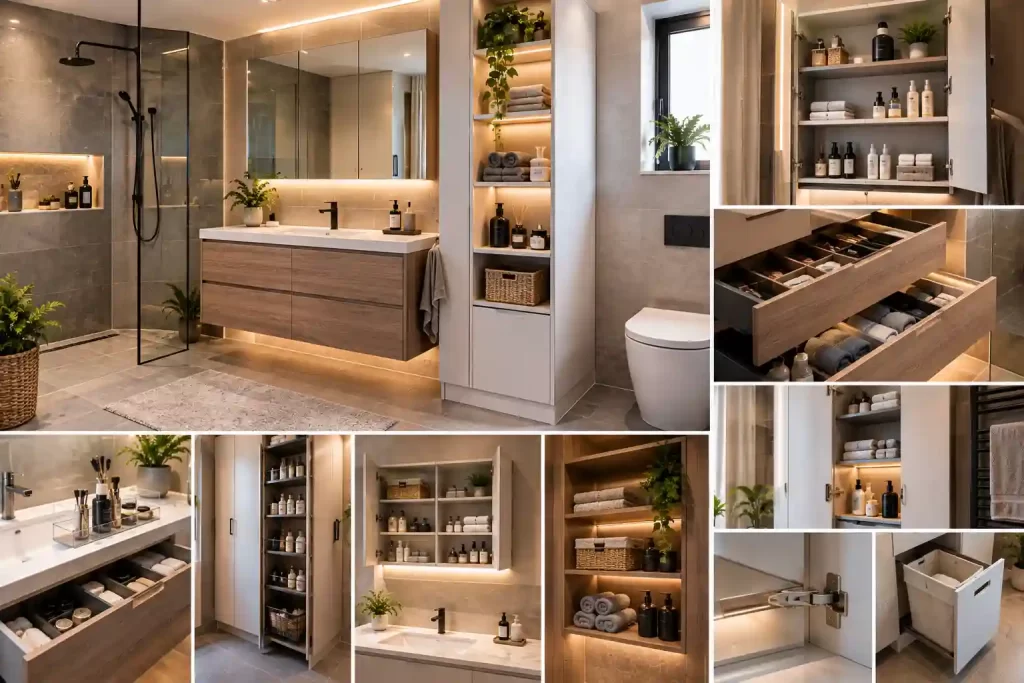
Open any bathroom cupboard in the average Australian home, and you will likely find the same thing: a jumbled pile of products, expired medications, tangled cords, and items that have not been touched in months. The bathroom is the most used room in the house, yet it is almost always the least organised.
And the frustration runs deeper than just the mess. A disorganised bathroom slows down your morning, creates tension in shared spaces, and makes even a well-designed room feel smaller and more stressful than it needs to be. Homeowners spend money on new tiles and fittings, but the clutter problem stays because the root cause was never addressed.
The root cause is always the same: not enough smart storage. Bathroom storage cabinets, when chosen and positioned correctly, are the single most effective solution to this problem. This guide explains exactly how to get that right.
The Clutter Problem Has a Structural Root
Most people treat bathroom clutter as a habit problem when it is actually a design problem. When a bathroom lacks adequate storage infrastructure, items end up on benchtops, window ledges, and the back of the toilet simply because there is nowhere else logical to put them. Bathroom storage cabinets change that equation entirely by giving every category of product a defined, enclosed home. The difference between a bathroom that feels chaotic and one that feels organised is rarely about how tidy the occupants are. It is almost always about whether the room was designed with enough storage capacity to absorb the reality of daily use. In Australian homes where bathrooms are often compact, this structural gap shows up fast and compounds over time.
Picking the Right Cabinet for Your Space
Wall-Mounted Versus Freestanding Options
The first decision any homeowner faces is whether to go wall-mounted or freestanding. Wall-mounted bathroom storage cabinets are the stronger choice in smaller bathrooms because they keep the floor clear, which visually opens up the space and makes cleaning significantly easier. Freestanding units offer more flexibility in rental properties or rooms where drilling into tiles is not an option, but they consume floor area that compact bathrooms simply cannot spare.
Depth, Height and the Forgotten Corners
Cabinet dimensions matter more than most people realise at the point of purchase. A cabinet that is too shallow to hold full-sized product bottles becomes frustrating within weeks. The standard recommended depth for bathroom storage cabinets used for everyday toiletries is between 150mm and 300mm, depending on the products being stored. Corner spaces are chronically underused in Australian bathrooms, and purpose-built corner cabinets can recover substantial storage volume from areas that would otherwise sit empty.
Recessed cabinets built into the wall cavity are another option worth considering during complete home renovations, as they add significant storage depth without reducing the usable floor or wall space in the room. This approach is far more cost-effective when planned during a renovation than retrofitted into a finished wall later.
Materials That Hold Up in Wet Environments
Bathroom environments are punishing for low-quality materials. Humidity, water splatter, steam from showers, and daily contact with cleaning products create conditions that will destroy poorly constructed cabinets within a few years.
The materials that consistently perform well in Australian bathrooms include:
- Moisture-resistant MDF with a sealed finish for interior shelving
- Solid timber with a marine-grade coating for face frames and doors
- Stainless steel or powder-coated aluminium for hardware and hinges
- PVC or fully wrapped thermofoil for door faces in high humidity zones
- Tempered glass for mirrored fronts, which resists warping and fogging
A concluding point worth noting here: the finish on the interior of bathroom storage cabinets matters as much as the exterior. Unfinished or poorly sealed interiors absorb moisture, develop mould, and start to smell within 12 to 18 months in a regularly used bathroom. Spend the extra money on fully sealed internals, and the cabinet will perform for a decade or more.
Storage Cabinets and Property Value in Australia
The connection between well-designed bathroom storage and property value is backed by consistent data from the Australian real estate market. A 2023 report from the Real Estate Institute of Australia noted that bathroom presentation ranks among the top three factors influencing buyer perception during property inspections, sitting alongside kitchen condition and overall floor plan. Buyers and renters form an opinion about a bathroom within seconds, and clutter, even in an otherwise well-finished room, reads immediately as a space that does not work.
Bathroom storage cabinets, particularly those integrated as part of complete home renovations, contribute directly to this perception. In Sydney’s competitive property market, homes presented with organised, well-fitted bathrooms consistently achieve stronger sale results than comparable properties where storage was treated as an afterthought. The investment in quality cabinetry during a renovation is one of the few improvements that pays back both in daily livability and in measurable resale positioning.
Fitting Cabinets Into a Broader Renovation Plan
Coordinating Storage With the Full Bathroom Layout
Bathroom storage cabinets should never be selected in isolation. They need to work with the vanity, the mirror placement, the shower screen position, and the door swing to avoid creating a room that feels crowded or poorly planned. During complete home renovations, the best results come from designing storage into the layout from the very beginning rather than sourcing cabinets after the rest of the room has been fitted out.
Timing Your Cabinet Installation Correctly
The installation sequence matters on a renovation site. Cabinets should be fitted after waterproofing and tiling are fully complete and signed off, but before final painting. This sequence protects the cabinet finish from construction dust and moisture, and allows the painter to cut in cleanly around the installed units for a professional finish.
Key decisions to lock in before ordering bathroom storage cabinets for a renovation:
- Confirm all plumbing rough-in positions before cabinet sizing
- Agree on door swing direction relative to shower and vanity placement
- Specify hinge type and soft-close requirements before fabrication
- Confirm wall structure behind the intended mounting points for load-bearing capacity
- Order cabinets with a minimum four-week lead time to avoid construction delays
Getting these details right before ordering saves time, money, and the frustration of cabinets that do not fit the finished space correctly.
Conclusion
Here is something the renovation industry does not say often enough: the most used room in your home deserves the most attention, not the least.
Bathroom storage cabinets are not a finishing touch. They are a functional decision that affects how your home feels every single morning. Whether you are doing a targeted bathroom update or working through complete home renovations across your property, getting the storage right changes everything about how the space performs.
Wondrous Renovations has spent over a decade helping Sydney homeowners build bathrooms that actually work, from the cabinet layout to the final fitting. Spots fill up fast, and the longer you wait, the further out your start date gets.
Call us today or grab your free quote online before your preferred slot is gone. Your bathroom has one job. Make sure it can do it.
Frequently Asked Questions (FAQs)
1. Are bathroom storage cabinets worth the investment for a small bathroom?
Absolutely. Bathroom storage cabinets are one of the highest value additions in a small bathroom because they recover usable space from walls and corners, reducing surface clutter and making the room feel noticeably larger and more functional daily.
2. What height should bathroom storage cabinets be mounted at?
The standard mounting height for wall-hung bathroom storage cabinets is between 1400mm and 1600mm from the floor to the top of the cabinet, but this should be adjusted based on the height of the primary users and the position of existing mirrors or lighting fixtures.
3. Can bathroom storage cabinets be included in complete home renovations?
Yes, and this is actually the most cost effective way to do it. Including bathroom storage cabinets as part of complete home renovations allows the storage design to be fully integrated with the layout, plumbing, and electrical plans from the start rather than being added as an afterthought.
4. How do I stop bathroom cabinet shelves from going mouldy?
Use fully sealed or moisture-resistant shelf materials, ensure adequate bathroom ventilation through an exhaust fan, and avoid storing wet items directly inside cabinets without allowing them to dry first to prevent moisture buildup over time.
5. How long do quality bathroom storage cabinets typically last?
A well-constructed cabinet using moisture-resistant materials and quality hardware should last 10 to 15 years in a regularly used Australian bathroom, provided it is installed correctly and the bathroom has adequate ventilation to manage humidity levels.