
Why The Joinery Company You Pick Actually Matters
Cabinets look simple from the outside. A box, a door, a handle. But the gap between a poorly fitted cupboard and one built specifically for your home is enormous, and it shows up the moment you start using it daily. Drawers that stick. Shelves that don’t suit what you actually store. Doors that swing into a wall you didn’t think about. This is why choosing between joinery companies deserves more thought than most homeowners give it.
Plenty of companies can install a flat-pack unit. Fewer can design, build, and fit something that solves your actual storage problems. That difference becomes obvious the first week you live with the result, when drawers open smoothly and everything actually has a place.
What Separates Good Joinery Companies From The Rest
In-House Design And Manufacturing
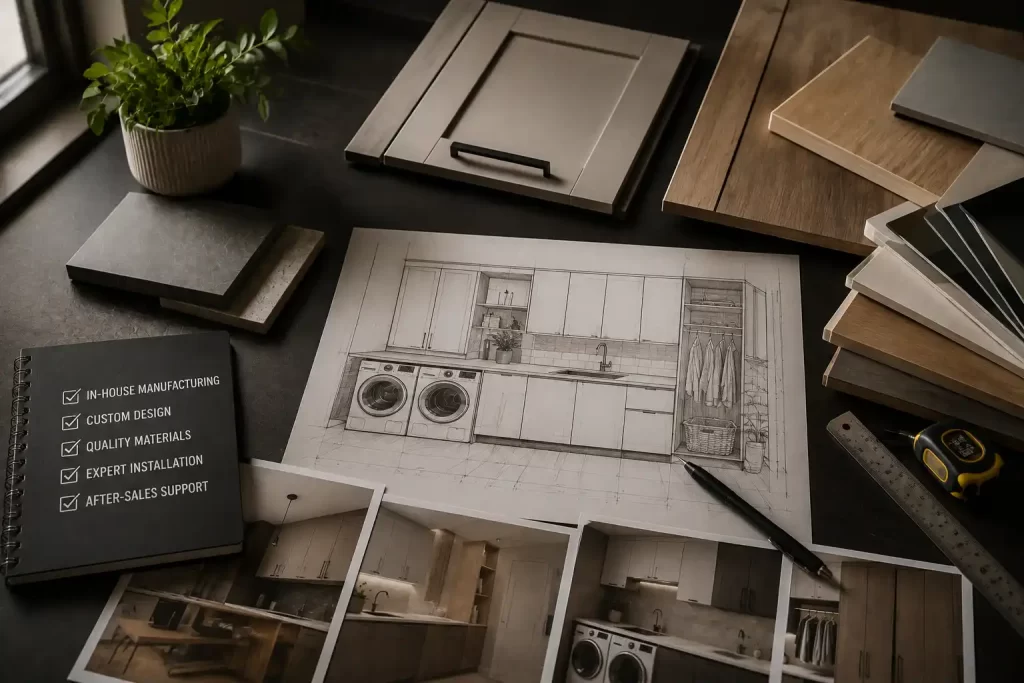
Some joinery companies outsource the build to a third-party factory, working from someone else’s templates. Others design and manufacture everything themselves. The second group can adjust on the fly when something doesn’t quite fit, because the people building it are the same people who measured your space.
A Real Understanding Of Small, Tricky Spaces
Laundries and small bathrooms are where average joinery falls apart fastest. There’s no room for error when a bench needs to fit around a washer, dryer, and sink in a two-metre gap. A capable laundry renovation service in Sydney treats this kind of space as a design puzzle worth solving properly, not a leftover room to fill with whatever’s left in the catalogue.
Communication That Doesn’t Disappear After The Quote
A telling sign among these businesses is how they behave after you’ve signed. Do they still answer calls quickly? Do they flag problems before they become expensive? Or does communication quietly drop off once the deposit clears? Ask past clients this question directly, it tells you more than any brochure.
What A Considered Approach Looks Like Side By Side
A generic fit-out and a properly considered build tend to differ in the same few places every time. Design usually means picking from a limited range versus a plan built around your exact space. Manufacturing is often outsourced to a third party rather than handled in-house, where adjustments can happen on the spot. Small spaces like laundries and bathrooms get treated as an afterthought instead of a priority worth planning properly. And communication, more often than not, quietly drops off after the deposit clears rather than staying consistent all the way to handover.
None of these differences show up in a glossy brochure. They show up three months after move-in, when a drawer sticks or a shelf doesn’t quite fit what you actually own.
Why Laundries Deserve The Same Care As A Kitchen
Laundries get treated as an afterthought far too often, tacked onto the end of a bigger renovation with whatever budget is left. That’s a mistake. A poorly planned laundry creates daily friction: awkward baskets, no bench space for folding, doors that clash with appliances.
A well-planned laundry fit-out should approach this room with the same care as a custom kitchen renovations sydney plumbing planned properly, storage built around what you actually own, and finishes that hold up to constant use and moisture. Get this right and it’s one of the most-used, least-noticed-until-it-works rooms in the house.
5 Questions To Ask Before Hiring Joinery Companies
- Do you design and manufacture in-house, or outsource it? This affects both quality and how flexible they can be mid-project.
- Can I see examples of small-space work, not just large kitchens?
- What happens if something doesn’t fit on install day? A good answer involves adjustment, not excuses.
- How do you handle plumbing and waterproofing for wet areas like laundries?
- Who is my main point of contact once the deposit is paid?
If a company hesitates on any of these, treat that as useful information.
What A Properly Managed Project Looks Like
The best joinery companies follow a similar pattern: measure the space properly, design around your actual habits, manufacture with tight tolerances, then install with minimal mess and disruption. Nothing about this process should feel rushed, and nothing should be a surprise once installation day arrives.
This matters even more for a laundry renovation service in Sydney, where plumbing, ventilation, and tight dimensions all need to line up correctly the first time. Mistakes here aren’t cosmetic — they affect how the room functions every single day.
The Cost Of Getting This Choice Wrong
Cutting corners on joinery rarely saves money in the long run. Poorly fitted cabinetry wears out faster, doesn’t use space efficiently, and often needs replacing well before it should. Reworking a badly built laundry or kitchen later costs far more than choosing properly the first time.
There’s also a stress cost that’s easy to underestimate. Chasing a company for updates, discovering mismeasured cabinetry, or dealing with a laundry that still doesn’t work after a full renovation is draining. Picking carefully from the start avoids all of it, and it usually means fewer sleepless nights spent wondering whether the project is actually on track.
Signs You’re Talking To The Right Team
A short conversation usually tells you more than a glossy brochure ever will. Pay attention to whether they ask about how you actually use the space, or jump straight to picking finishes. The first approach signals a design mindset. The second signals a sales mindset.
It’s also worth noticing how they handle awkward questions. Ask about a past project that didn’t go to plan, and watch the response. A team confident in their process will explain what happened and how they fixed it. One that gets defensive or vague is telling you something important before you’ve even signed a contract.
Timelines are another giveaway. Vague promises like “a few weeks, roughly” are far less reassuring than a written schedule with clear milestones. The businesses worth hiring are usually the ones happy to put their timeline on paper, because they’ve done the planning to back it up.
Bringing It All Together
Choosing between joinery companies isn’t just about price or a nice showroom display. It comes down to who designs properly, builds accurately, and stands behind the result once the last cabinet is installed. Get this choice right, and you end up with storage and fittings that make daily life easier for years. Get it wrong, and you’re left living with someone else’s shortcuts.
Whether it’s a full kitchen, a wardrobe, or a full laundry fit-out handled from start to finish, the same rule applies: the company behind the build matters just as much as the design itself.
Ready For Joinery That’s Actually Built For Your Home?
Cabinets that don’t fit properly don’t get better with time, they just get more annoying. At Wondrous Kitchens, our team designs and manufactures every piece of joinery in-house, so what you’re shown in the plan is exactly what gets installed in your home. Booking slots for design consultations move quickly, especially heading into the busier renovation months, so reaching out sooner means securing the timeline you actually want.
Contact Wondrous Kitchens today for a free, no-obligation quote and see what properly built joinery can do for your home.
Frequently Asked Questions
How do I know if joinery companies are actually trustworthy?
Ask for recent references and photos of completed small-space jobs. Companies confident in their work share this readily; hesitation is a warning sign.
Is a laundry renovation worth the investment?
Yes. Laundries are used daily, and a well-planned space saves real time and frustration compared to a cramped, poorly organised one.
Can these teams work around existing plumbing?
Most experienced businesses can, though it depends on the current layout. A proper laundry fit-out will assess this during the initial design stage.
How long does a typical laundry renovation take?
Most laundry renovations take one to two weeks, depending on plumbing changes and how much of the layout is being reworked.
What’s the biggest red flag when comparing joinery companies?
Vague answers about who actually builds the cabinetry. If they can’t clearly explain their manufacturing process, that uncertainty usually shows up in the final result.