Most homeowners start with a floor plan that was designed for somebody else. The layout does not match how the family actually moves through the space, the kitchen sits in the wrong corner, and the bathroom feels like an afterthought. Over time, that friction builds, and the home that was supposed to feel like yours never quite does.
The frustration deepens when you realize that standard renovation packages are built around volume, not individuality. Contractors offer pre-set options, suppliers push stock finishes, and suddenly your renovation looks identical to the one three streets over. You invested real money and ended up with something generic.
Custom architecture solves this at the root. It puts structural and spatial decisions back in your hands, guided by professionals who design around your life rather than a catalogue. But it is not automatically the right move for every project. This guide breaks down exactly what you need to weigh before committing.
The Core Premise of Custom Architecture
Custom architecture is the practice of designing a building or interior space from a blank slate, driven entirely by the occupant’s specific functional and aesthetic requirements. Unlike off-the-shelf renovation packages, it does not begin with a template and work backwards. It starts with a site assessment, a detailed brief from the homeowner, and a structured design process that accounts for everything from sun orientation and traffic flow to storage demand and material longevity. In residential settings, this approach is increasingly applied not just to new builds but to significant renovation projects where standard solutions simply fall short. The result is a space that performs exactly as intended, because every dimension, junction, and finish was chosen with a clear purpose rather than a default setting.
Budget Realities You Cannot Ignore
Custom architecture typically carries a higher upfront investment than volume renovation work, and that gap exists for a legitimate reason. Design time, material sourcing, and project management all operate at a different level of detail. A custom kitchen, for instance, requires far more back-and-forth between the designer, cabinetmaker, and trades than a flatpack installation ever would.
That said, the financial picture is more nuanced than a straight price comparison. A properly executed custom architecture project adds documented value to the property. Sydney real estate data consistently shows that homes with well-designed, high-quality interiors outperform comparable properties at resale. The return on a considered design is measurably stronger than a surface-level refresh.
The smarter question to ask is not “can I afford custom architecture?” but rather “what does it cost me to get this wrong twice?” Many homeowners who opt for the cheaper route end up renovating the same space again within five to eight years. When you factor in double labour, double disruption, and double waste, the budget argument shifts significantly.
Spatial Fit vs Structural Constraints
Reading Your Site Before You Design
Before any design conversation begins, the existing structure needs to be properly read. Load-bearing walls, plumbing stacks, electrical runs, and ceiling heights all place real limits on what can change and what cannot. A custom architecture approach starts by mapping these constraints accurately, so the design works with the building rather than against it.
Skipping this step is one of the most common and expensive mistakes in residential renovation. Homeowners who fall in love with a design concept before understanding the structural reality often face costly variations mid-project when the builder uncovers something the brief never accounted for.
When the Space Demands a Custom Solution
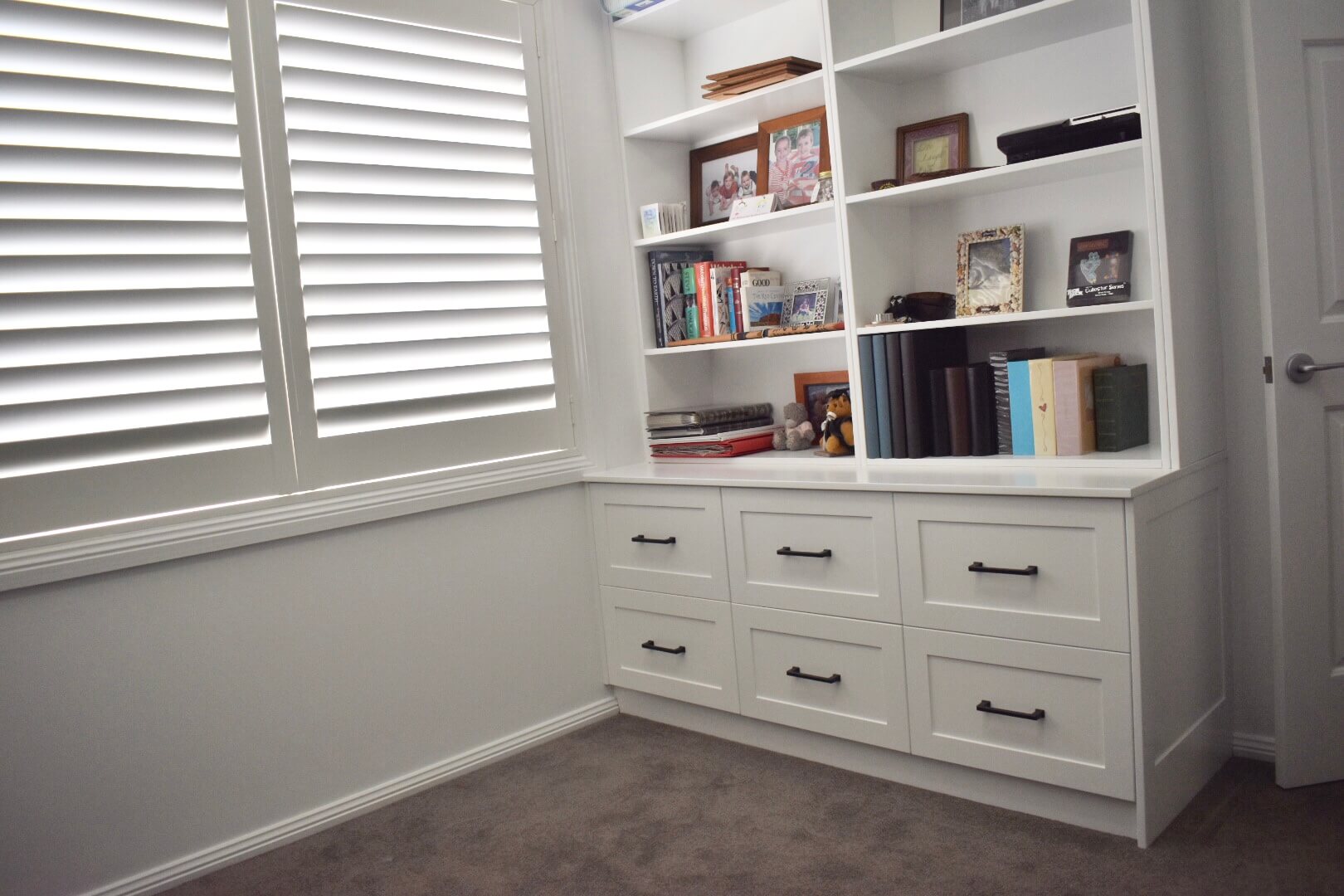
Some homes simply cannot be improved with standard products. Older Sydney properties, in particular, have irregular floor plans, non-standard ceiling heights, and room proportions that pre-made solutions were never built to fit. In these cases, custom architecture is not a luxury choice. It is the only practical one. Trying to force standard cabinetry or off-the-shelf joinery into an irregular space creates gaps, visual inconsistency, and functional dead zones that no amount of styling can fix.
Design Decisions That Affect Long-Term Liveability
Two areas of a home carry more daily functional weight than any other: the kitchen and the bathroom. Getting these right through custom architecture pays dividends every single day. Getting them wrong creates friction that compounds over the years.
In kitchen design, the work triangle between the cooktop, sink, and refrigerator is well-established, but custom architecture goes further. It accounts for the number of people who cook simultaneously, where children move during meal prep, how much bench space is needed for specific appliances, and whether the kitchen connects to an outdoor entertaining area. These are not details that a stock renovation package ever addresses. Similarly, bathroom design under a custom architecture framework considers water pressure zoning, ventilation rates, slip resistance requirements, and fixture placement relative to natural light. For homeowners looking at custom made bathroom vanities Sydney suppliers can offer a broad range of specifications, but the vanity still needs to be positioned, plumbed, and lit within a space that was designed to receive it properly.
The specification of materials in a custom architecture project also follows a different logic. Rather than choosing from a supplier’s available range, the designer works backwards from performance requirements: surface hardness, moisture resistance, thermal expansion rates, and cleaning demands all inform the material selection before aesthetics enter the conversation.
The Project Management Layer Matters
Coordinating Trades in a Custom Build
One of the most overlooked factors in custom architecture is how trades are coordinated. In a standard renovation, the builder manages a relatively predictable sequence of work. In a custom project, the interdependencies are tighter. The cabinetmaker needs confirmed wall dimensions before fabrication begins. The electrician needs to know fixture locations before rough-in. The tiler needs to work around custom joinery rather than standard clearances.
Without strong project management at the centre of this, delays and conflicts multiply quickly. The best custom architecture outcomes happen when there is a single point of accountability that understands both the design intent and the construction sequence, and who keeps every trade informed in real time.
What to Look for in a Custom Architecture Partner
Not every renovation business operates at this level of coordination. When evaluating a partner for a custom architecture project, look beyond the portfolio. Ask how variations are managed, how the team communicates progress, and what happens when a supplier delays a key component. A team that can answer these questions clearly has done this before. A team that cannot is likely to cost you more than the initial quote suggests.
Indicators That Custom Architecture Is the Right Call
Custom architecture makes clear sense in the following situations:
- Your property has non-standard dimensions that make off-the-shelf products a poor fit
- You are planning a long-term stay and want the space designed around how you actually live
- Previous renovations have not resolved the underlying spatial or functional issues
- You are combining multiple trades into one project and need a cohesive design across all of them
- You want custom made bathroom vanities Sydney craftspeople can build to exact specifications, rather than adapting stock units to a space they were not designed for
- Your brief includes features that simply do not exist in any standard product range
- You want documentation of design decisions for future renovations or property sales
If three or more of these apply to your project, custom architecture is almost certainly the more cost-effective path when the full project lifecycle is considered. The upfront investment buys you a result that does not need to be revisited.
Closing Thoughts
There is a version of renovation that looks finished but never feels right, and most homeowners have either lived it or watched a neighbour go through it. Custom architecture exists precisely to close that gap between what a home looks like and how it actually functions for the people inside it.
If you are at the planning stage of a kitchen, bathroom, or full home renovation in Sydney, Wondrous Renovations brings over ten years of custom architecture experience to every project. The team manages everything from concept and budgeting through to build completion, with a single point of accountability throughout. Custom made bathroom vanities Sydney homeowners can be proud of, kitchens that are designed around real families, and spaces that hold their value long after the final trade walks out. Do not wait until a standard renovation disappoints you again.
Contact Wondrous Renovations today for a free consultation and find out exactly what a custom architecture approach can do for your home.
Frequently Asked Questions (FAQs)
1. What does custom architecture actually mean for a home renovation?
Custom architecture means your home is designed from scratch around your specific needs, site conditions, and lifestyle rather than adapted from a standard template.
2. Is custom architecture only for new builds, or does it apply to renovations too?
It applies fully to renovations, particularly where existing layouts, irregular dimensions, or repeated standard solutions have failed to meet the homeowner’s requirements.
3. How much more does custom architecture cost compared to standard renovation packages?
Costs vary by project scope, but the premium is typically offset by stronger property value outcomes and the elimination of repeat renovation expenses down the line.
4. Can I get custom made bathroom vanities Sydney suppliers offer as part of a larger custom architecture project?
Yes, custom made bathroom vanities Sydney suppliers produce can be fully integrated into a broader custom architecture brief, ensuring the vanity works within a space designed specifically to receive it.
5. How long does a custom architecture project take from brief to completion?
Timelines depend on project complexity, but a well-managed residential custom architecture project typically runs from three to nine months, including design, approvals, and construction.